
• Skip to primary navigation
  • Skip to main content
  • Skip to primary sidebar
Ruhlman
  • About
  • My Books
  • My Kitchen Essentials
  • Press
  • CV
  • Contact
menu icon
go to homepage
search icon
Homepage link
  • About
  • My Books
  • My Kitchen Essentials
  • Press
  • CV
  • Contact
×

How To Make Ramen Noodles

Published: Apr 16, 2021 by Michael Ruhlman · 6 Comments

ramen
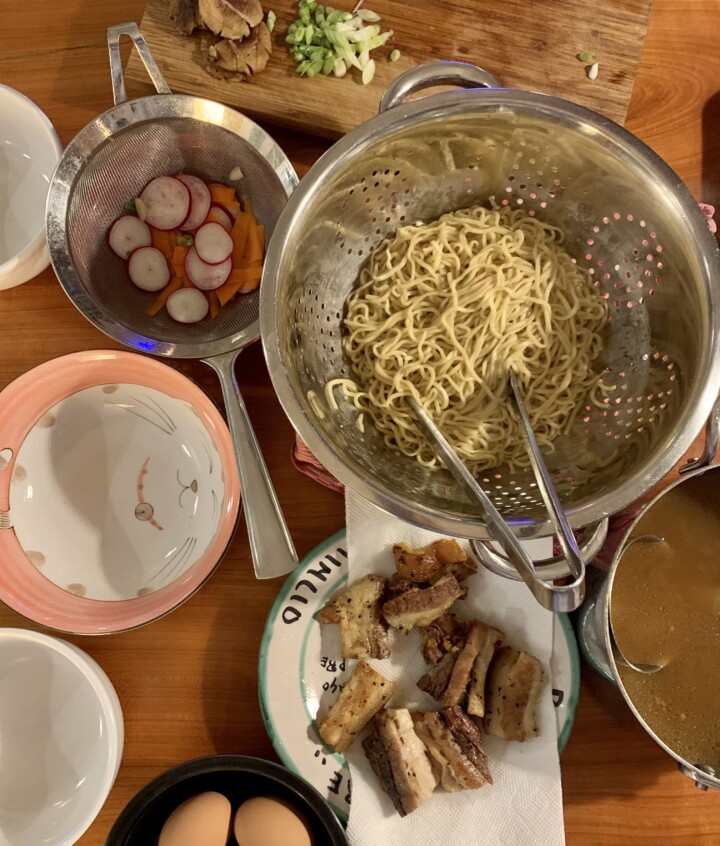
Ramen, meat broth, blanched carrot and radish, braised and seared pork belly.

I have always wanted to make ramen noodles and this week at last got around to making them.

Ramen noodles are made distinctive by an alkaline dough. I used sodium carbonate (ordered from Amazon, but you can make your own by baking your baking soda, according to Harold McGee). You can also use food grade lye, which you will have on hand if you make pretzels. Just be careful, it’s a powerful as acid, just on the other end of the pH spectrum.

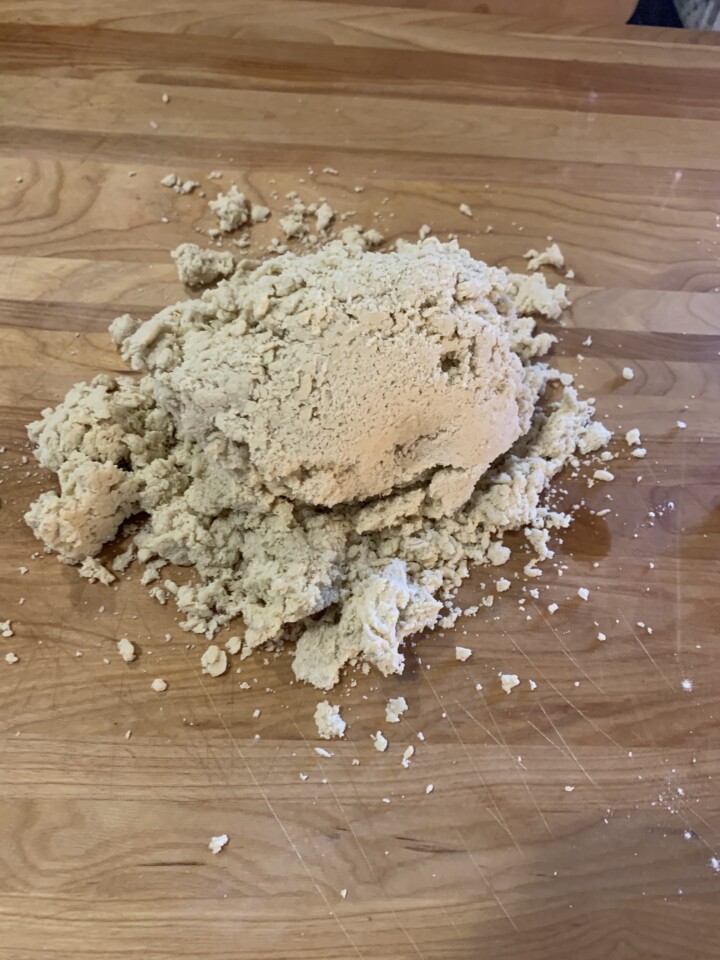
The main difference between ramen dough and regular pasta dough is how dry and dense it is. It doesn’t quite come together in a stand mixer. (See pix after recipe.) So you have to bring it together by hand. Once you’ve done this, and muscled it into shape, it’s very clean and easy to work with, with almost no sticking. And the bread flour and extra gluten result in their fabulous texture when cooked (just until the float and no longer).
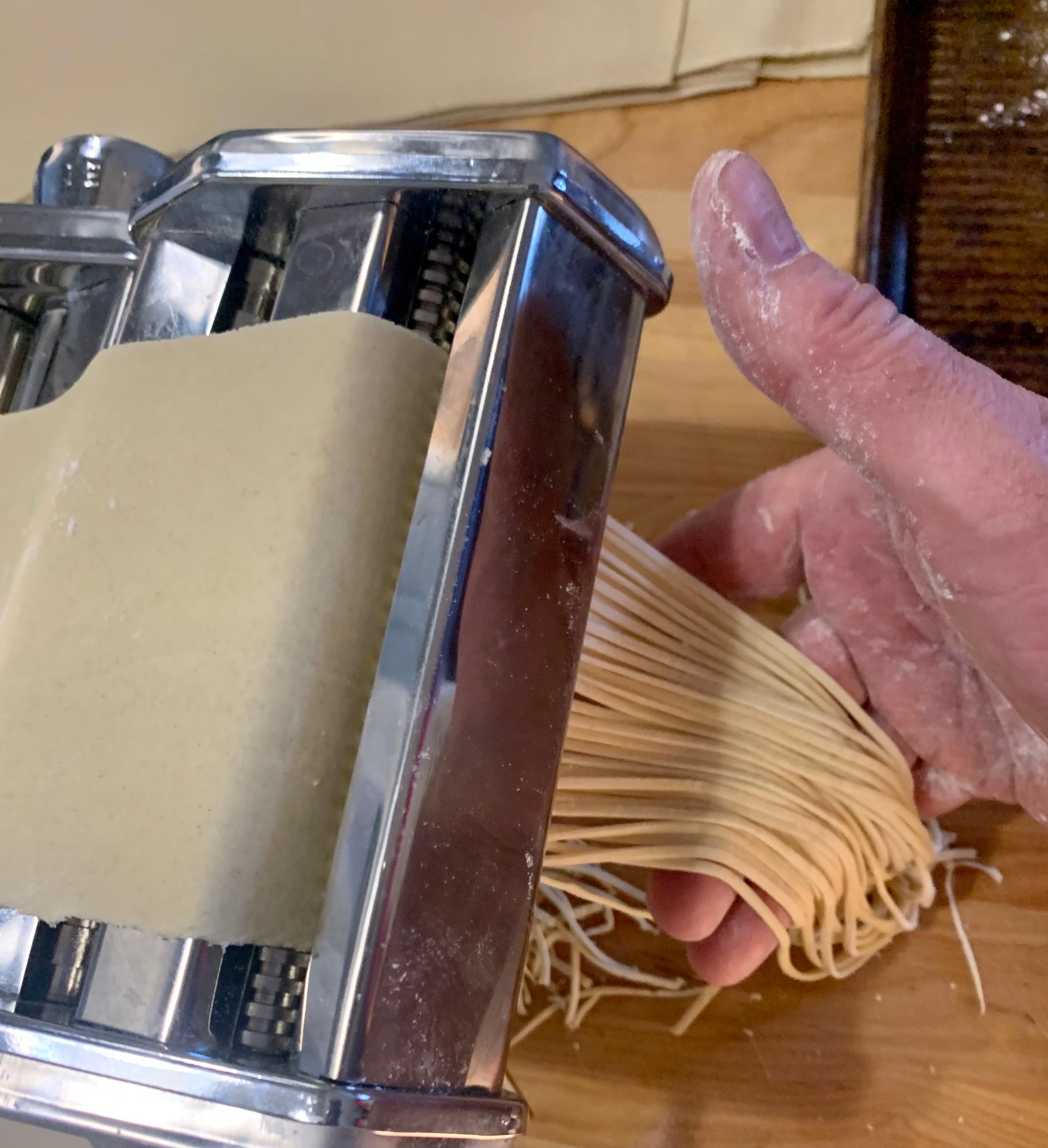
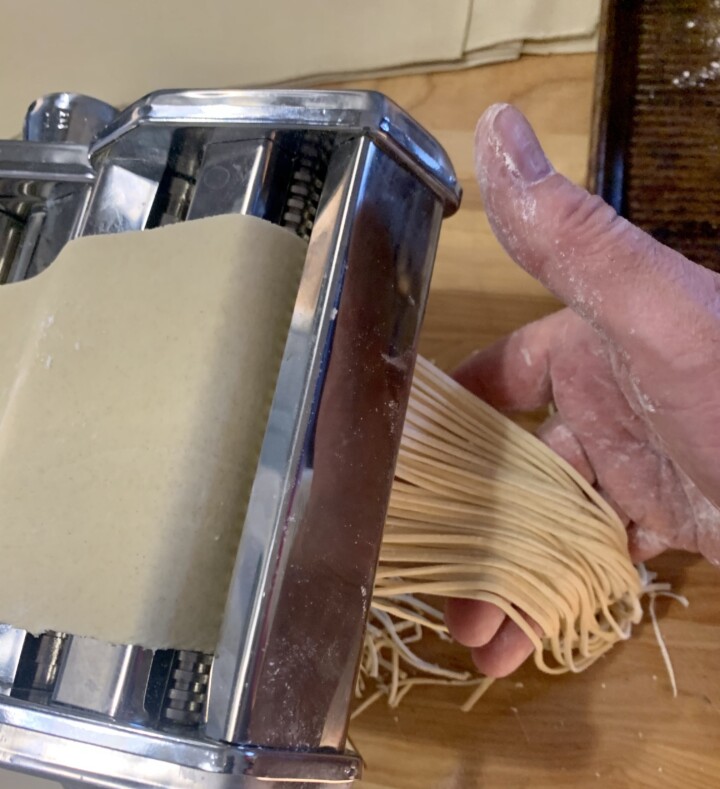
Pretty much the same effort as making your own egg pasta, easier to cut. You could even cut with a knife. It would be difficult to roll sheets to 1.5-2 mm without a pasta machine, though.

Here's the recipe I've settled on. Amazing flavor and texture. Don't over cook. Serve with simple clean broth, or just some soy sauce and a drizzle of sesame oil to best appreciate the flavor and texture.

Ramen Noodles

How to make the alkaline pasta
Print Recipe
Prep Time 1 hour hr
Cook Time 2 minutes mins
Servings: 6
Course: Main Course
Cuisine: Asian
Ingredients Method

Ingredients
  

  • 300 grams water (about 1 ½ cups)
  • 15 grams sodium carbonate (about 3 ¼ teaspoons)
  • 15 grams salt (2 teaspoons)
  • 5 grams vital wheat gluten (about 1 ½ teaspoons)
  • 500 grams King Arthur's bread flour. (about 3 ½ cups)

Method
 

  1. Measure out your water. Add the sodium carbonate to the water (it's the opposite of but as similar effects of an acid on your skin so be careful) and stir till it's dissolved. You won't be using all of this mixture.
  2. Put the wheat gluten and the flour in the bowl of a standing mixer fitted with a dough hook. Turn the machine on medium.
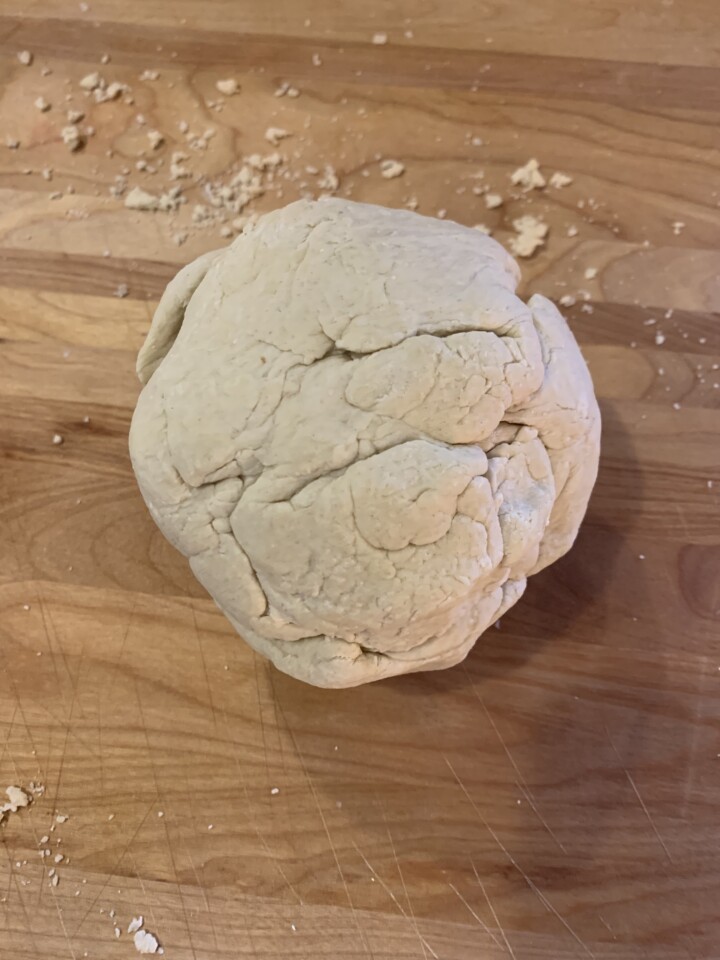
  3. Measure out 200 grams (about a cup) of the water and sodium carbonate mixture, and slowly pour it into the mixing bowl. Scrape the flour down of the sides and keep mixing. Add just enough extra water/sodium carbonate till it's just starting to come together. It will look mealy and not form a ball with the dough hook. Stop the machine and when you can squeeze the meal into a ball, you can dump the contents out onto a cutting board, and knead by hand until you have a stiff ball of dough.
  4. Divide the dough into 6 equal pieces. Using a pasta machine roll the pieces into sheets, beginning with the largest setting and working your way down till the dough is about 1.5 mm thick (it was the third to last setting on mine).
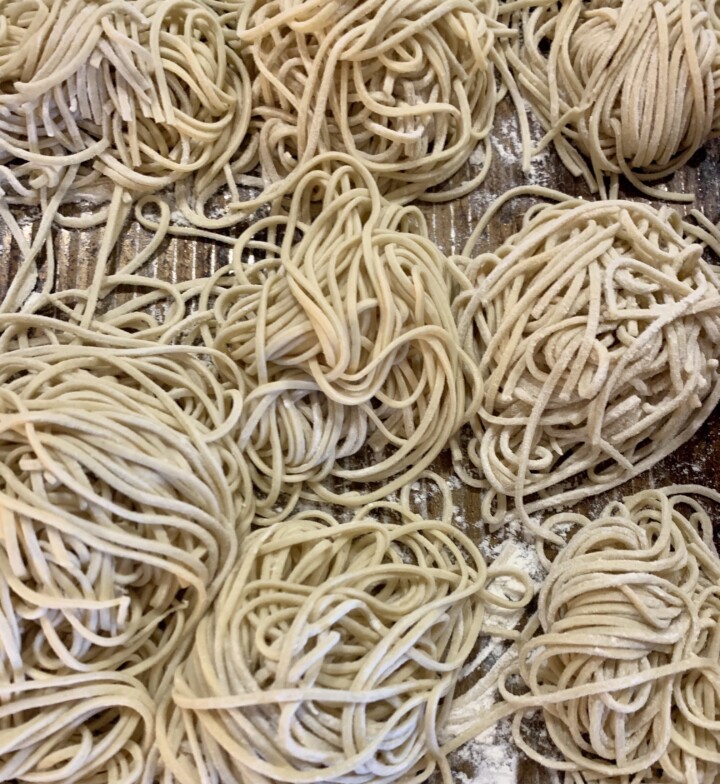
  5. Roll the sheets through the spaghetti cutter. Lightly dust with flour and fold into balls. Refrigerate for a day or so (ideally, though they can be cooked straight away).
  6. To cook bring a large pot of seasoned water to a boil. Drop the ramen in and stir. When the water returns to a boil and the ramen float, they're done. Drain and serve.
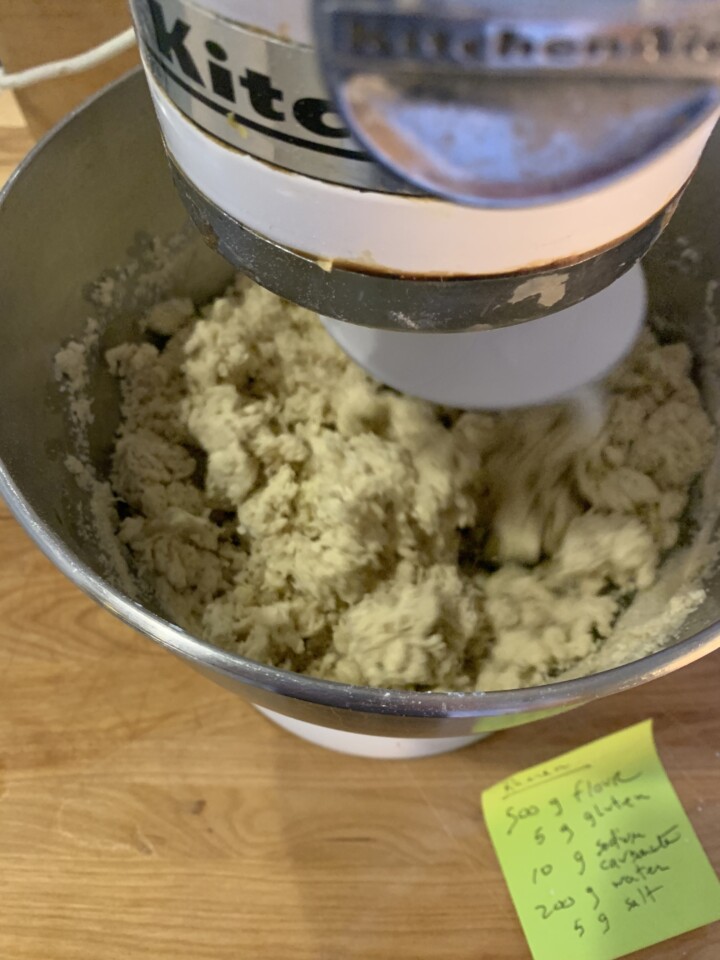
Mixing the dough. It won't form a ball in the bowl.
Notice how mealy it still is, just out of the mixer.
The kneaded dough, ready to cut and begin rolling through pasta machine.
ramen
« Friday Cocktail Hour: The Hanky Panky
Friday Cocktail Hour: The Little Italy »

Reader Interactions

Comments

  1. Theresa curry

    April 17, 2021 at 11:40 am

    Michael I am really enjoying your newsletter and look forward to it every week or so. I would love it if you could experiment with buckwheat ramen as I love the nutty taste of the soba. Please keep up the good work.

    Reply
    • Michael Ruhlman

      April 17, 2021 at 3:48 pm

      glad you're liking newsletter!

      Reply
  2. Laree Draper

    April 18, 2021 at 4:52 pm

    Hi, Michael, thank you! I've been wanting to make ramen for a long time and will finally do it thanks to your nudge. I have food grade lye -- do you think the measurement would be the same at 15 gr?

    Much appreciation for the couple of decades I've been following you. Own and use all of your cooking-related books. (I think.)

    Reply
    • Michael Ruhlman

      April 18, 2021 at 6:05 pm

      probably? but I'd do some googling to figure out a proper percentage.

      Reply
    • Andrew

      December 06, 2025 at 4:35 am

      A bit late for you, but perhaps it can help others: 10.7 g of sodium hydroxide (lye) will be the equivalent amount of alkaline (normality) to 15 g of sodium carbonate.

      Reply
      • Michael Ruhlman

        December 31, 2025 at 7:13 pm

        always helpful, thank you!

        Reply

Leave a Reply Cancel reply

Your email address will not be published. Required fields are marked *

Recipe Rating


Primary Sidebar

Hi, I'm Michael Ruhlman, an award-winning author and cook who writes about chefs, food and cooking, among other things.

More about me →

  • Twitter
  • Facebook
  • Instagram

See my books!

Ratio App for iPhone

After I wrote my book Ratio: The Simple Codes Behind the Craft of Everyday Cooking, a colleague and I built a ratio calculator for iPhones that allows you to cook without recipes. For doughs, batters, custards, sauces, stocks and more, simply plug in the amount of one ingredient and the amounts of the other ingredients are instantly calculated. It's also a handy reference for dozens of our most common preparations. ($4.99 in the app store.)

Collaborate

I’ve collaborated on a dozen books, including cookbooks and a memoir. If you'd like to collaborate on a project, please contact my agent, Gail Hochman, [email protected], at Brandt & Hochman Literary Agents, Inc.

For speaking engagements contact, Kip Ludwig, [email protected].

Hi, I'm Michael Ruhlman, an award-winning author and cook who writes about chefs, food and cooking, among other things.

More about me →

  • Twitter
  • Facebook
  • Instagram

See my books!

Ratio App for iPhone

After I wrote my book Ratio: The Simple Codes Behind the Craft of Everyday Cooking, a colleague and I built a ratio calculator for iPhones that allows you to cook without recipes. For doughs, batters, custards, sauces, stocks and more, simply plug in the amount of one ingredient and the amounts of the other ingredients are instantly calculated. It's also a handy reference for dozens of our most common preparations. ($4.99 in the app store.)

Collaborate

I’ve collaborated on a dozen books, including cookbooks and a memoir. If you'd like to collaborate on a project, please contact my agent, Gail Hochman, [email protected], at Brandt & Hochman Literary Agents, Inc.

For speaking engagements contact, Kip Ludwig, [email protected].

Footer

↑ back to top

About

  • Privacy Policy
  • Disclaimer
  • Terms & Conditions
  • Accessibility Policy

Newsletter

  • Sign Up for my bimonthly newsletter.

Contact

  • Contact
  • FAQ

As an Amazon Associate I earn from qualifying purchases.

Copyright © 2020 Brunch Pro on the Brunch Pro Theme